
A long coast, mountains over the sea and multi-day passages
Mallorca
Mallorca is the largest of the Balearics and the one that asks for the most time. Its coastline runs well beyond five hundred kilometres and changes completely from one end to the other: short turquoise coves in the south-east, and an entire mountain range, the Serra de Tramuntana, dropping sheer into the sea in the north-west.
The south-east: short coves and turquoise water
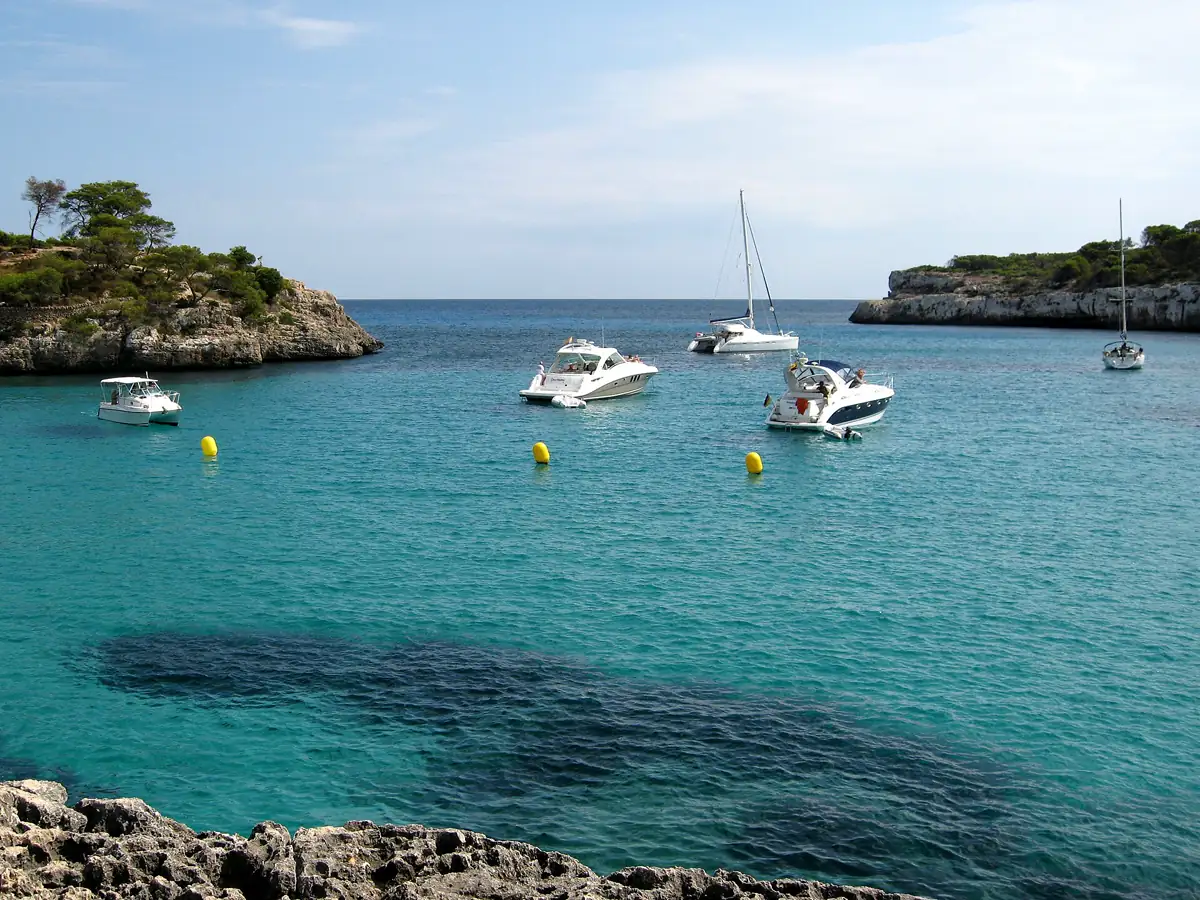
From Cala d’Or to Santanyí, the coast breaks into a run of narrow, deep coves sheltered by low rock and pine. They are comfortable anchorages and the water has a turquoise very close to that of the Pitiusas.
Cala Mondragó, inside a natural park, is the best known of the stretch: two fine-sand inlets with the pine forest reaching the shore.
The Serra de Tramuntana
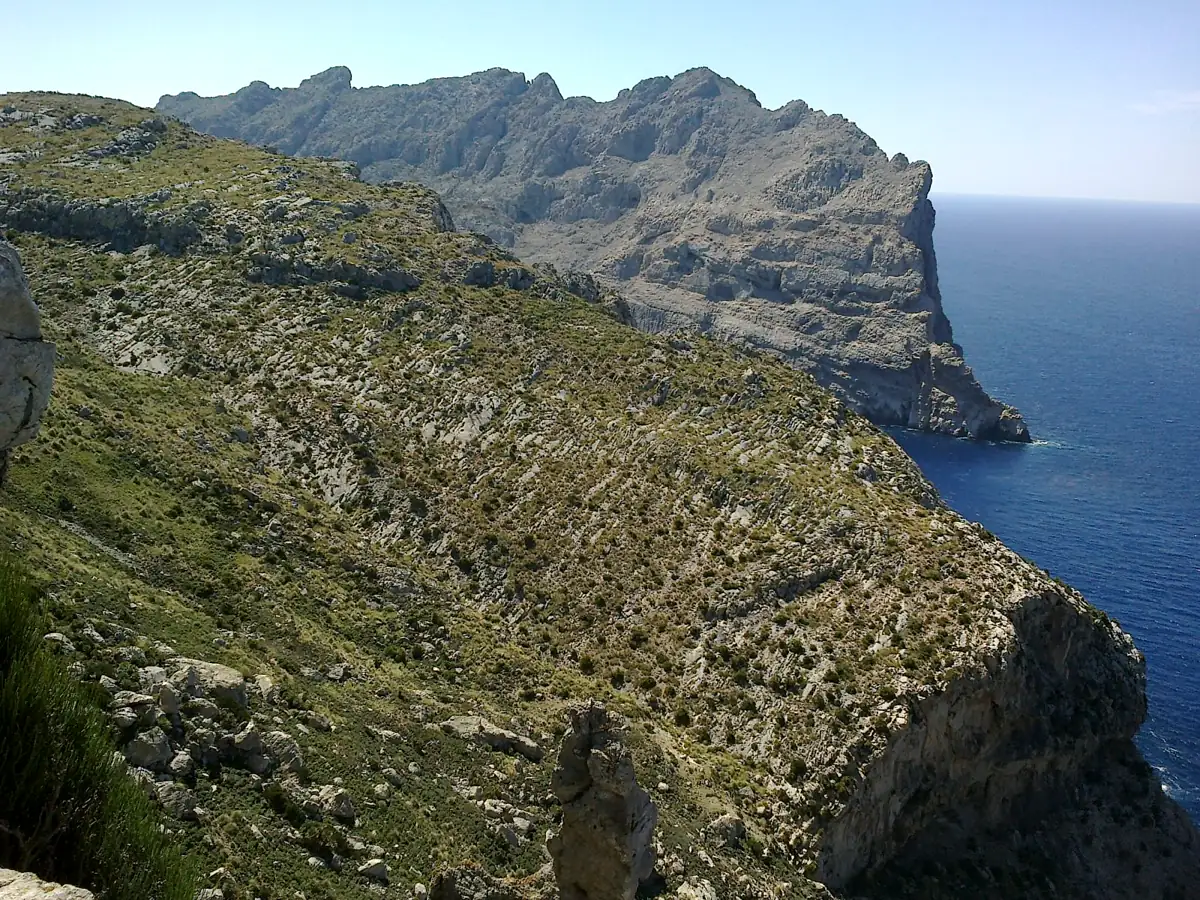
The north-west coast is something else entirely. The range, a World Heritage site, drops straight into the sea in cliffs hundreds of metres high, and the coves are small bites of rock at the foot of the mountain.
Sa Calobra and Cala Tuent are the two reference points: spectacular scenery, deep water and a sense of scale that does not exist in the south. It is a less sheltered coast, so it is sailed with a close eye on the forecast.
Passage from Ibiza
The distance between Ibiza and Mallorca is the perfect excuse to actually sail, rather than loop out and back to port. A two-to-five-day passage lets you cross, work along a coast calmly and sleep on board or in port depending on the day.
It is also the kind of service we run as a delivery: moving the boat from one port to another with professional crew and position reports throughout the passage.
Recommended beaches and coves
Cala Mondragó
Inside a natural park in the south-east. Two fine-sand inlets and very clear water.
One of the few large coves still undeveloped. When you come in and see the pine forest running right down to the sand, you understand what was lost elsewhere and saved here in time.
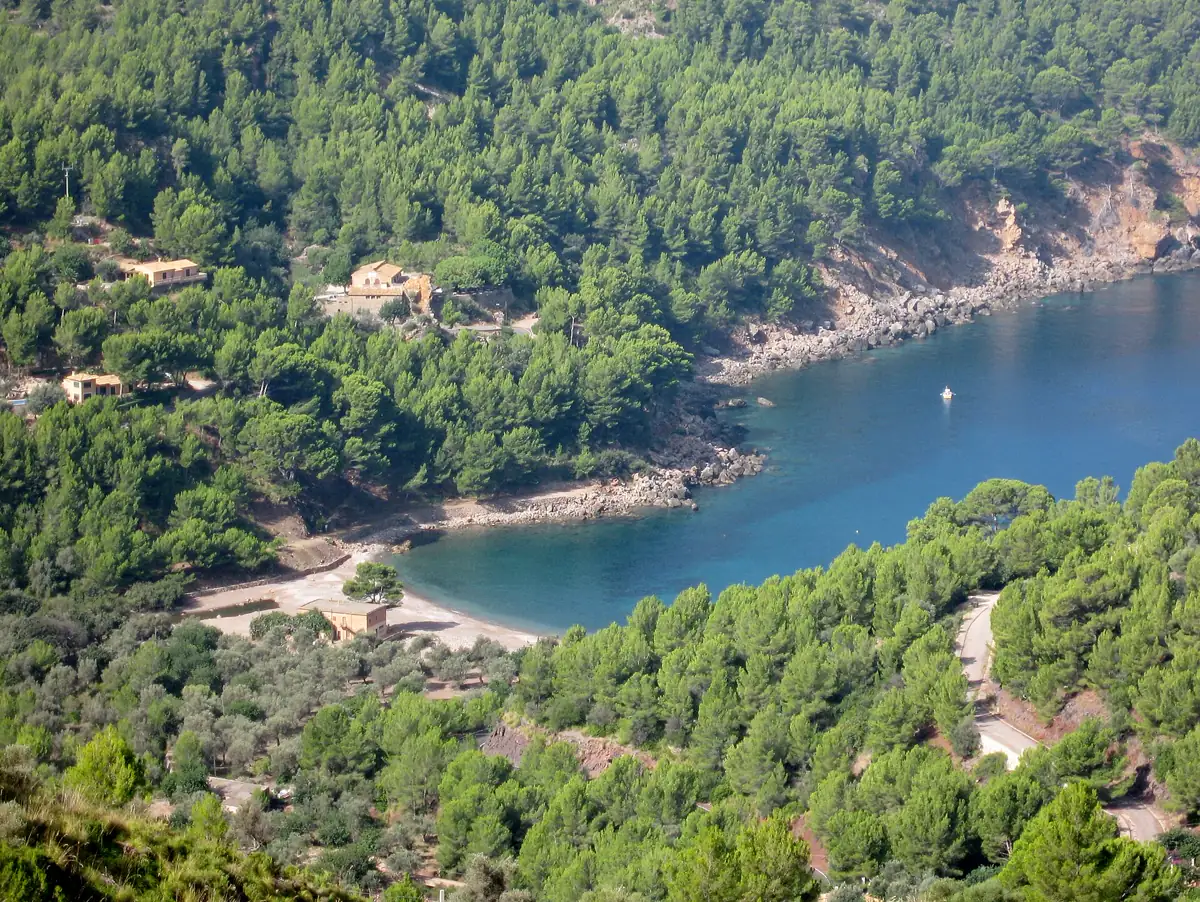
Cala Tuent
At the foot of the Tramuntana, pebbled, with the mountain above. Quiet even in summer.
The mountain is directly overhead and the boat suddenly feels tiny. It is a place for not talking much, which in summer is worth a lot.
Sa Calobra
The mouth of the Torrent de Pareis between cliffs. One of the most striking landscapes in the Balearics.
The first time we arrived by sea we spent a good while with our necks craned and nothing to say. Go early, before the tourist boats start arriving.
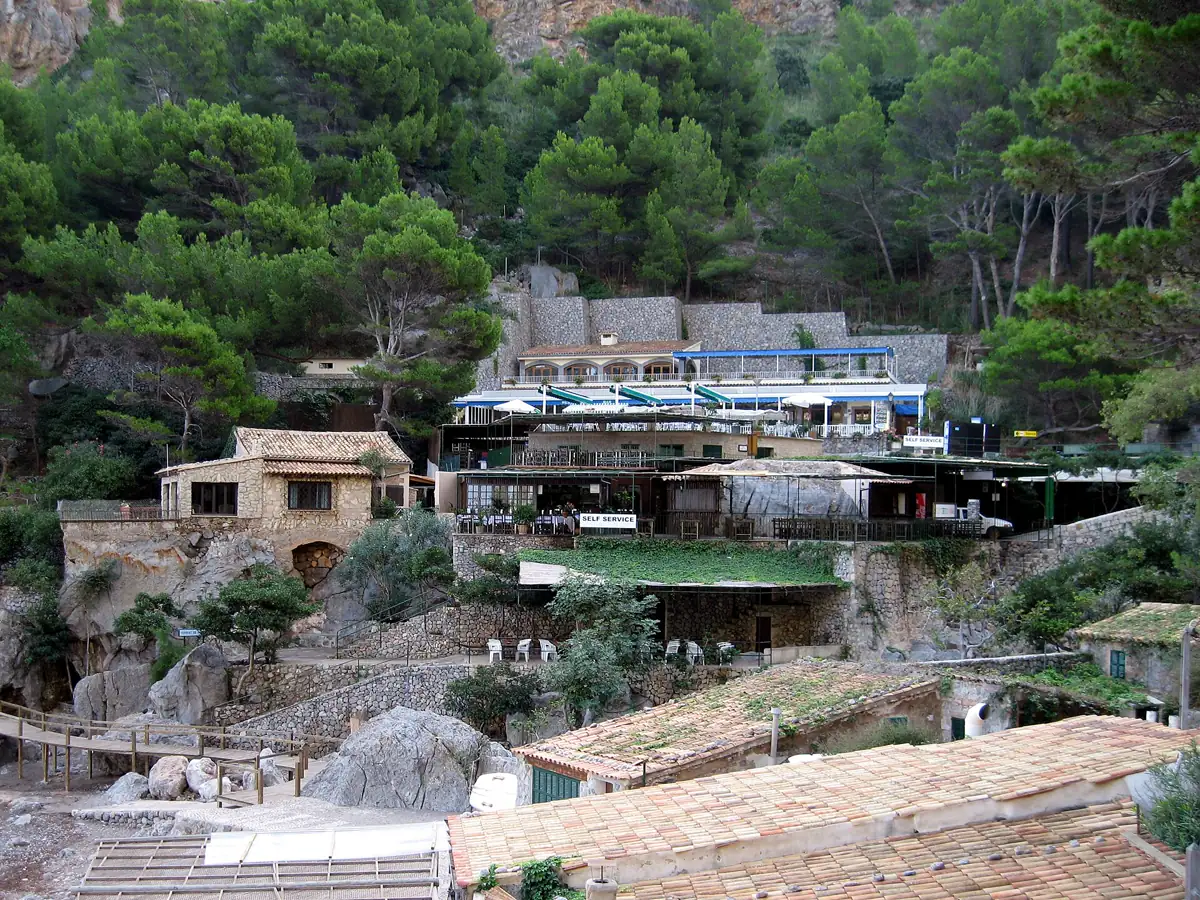
Cala Deià
Small and stony, with fishermen’s huts. Exceptionally clear water and very good snorkelling.
Small, awkward and charming. The kind of place you warm to precisely because it does not make things easy for you.
Es Trenc
The great sandy beach of the south, long and undeveloped. Very different from the rest of the island.
Sand and nothing else, for kilometres. After a couple of days of Tramuntana it lands beautifully: it is a rest for the eyes.
Portals Vells
A sheltered inlet in the south-west, with caves cut into the rock by the water.
The caves at water level send children wild, and us a little too. The anchorage is among the calmest in the south-west.
Cala Llombards
A small sandy cove between cliffs at the southern tip. Good shelter in northerly wind.
Small, white and very well sheltered from the north. The one we keep in reserve for days when the rest of the coast is choppy.
Recommended restaurants
Opening times, prices and services change every season. If you want to eat at one of them, tell your skipper and we will book ahead.
Es Vergeret (Cala Tuent)
A panoramic terrace above the bay, with rice dishes and fish. A Tramuntana classic.
Ca's Patró March (Cala Deià)
Perched on the rocks of the cove with the sea right below. Fish and seafood in a one-off setting.
Es Repòs (Portals Vells)
Rice dishes with your feet in the sand in a very sheltered cove. A calm, family-friendly plan.
Nautilus (Port de Sóller)
On the cliff above the harbour mouth, running since 1972. Good produce and the best sunset in the port.
Kingfisher (Port de Sóller)
Right on the quay, looking out at the boats. Day-boat fish and market cooking.
Sa Llotja (Portocolom)
A terrace over the fishing harbour, market cooking and dishes to share.
Celler Sa Sínia (Portocolom)
A Portocolom institution, well known for its fish and rice dishes straight from the market.
South-east harbours
Porto Petro and Cala Figuera still have fishing-port restaurants working with the day’s catch at sensible prices.
Frequently asked questions
Can you sail from Ibiza to Mallorca?
Yes. It is a regular passage and we run it as a multi-day trip, or as a delivery if what you need is to move the boat between ports.
Which coast of Mallorca is best for sailing?
The south-east for comfortable coves and turquoise water; the Serra de Tramuntana for spectacular scenery. The choice depends on time and the forecast.
How many days do you need?
Two days covers one coast. Four or five let you combine the south-east and the Tramuntana without rushing. To go right round the island we recommend a minimum of one week in a motor boat and two weeks in a catamaran, which is what it takes to do it comfortably and without sailing against the clock.
Shall we plan your day?
Tell us what you feel like and we build the route around it, with skipper and crew included.
Image credits
The photographs on this page come from Wikimedia Commons and are used under their respective free licences.
- Olaf Tausch · CC BY-SA 3.0
- Olaf Tausch · CC BY-SA 3.0
- Olaf Tausch · CC BY 3.0
- rene boulay · CC BY-SA 3.0