
Edgar’s island: two very different coasts and coves you only see properly from the sea
Menorca
Menorca is Edgar’s island — he was born and grew up here — and it shows in how we show it to people: by the names of coves, not by lists of must-sees. It has been a Biosphere Reserve since 1993, it is far less built up than its neighbours, and it holds a natural harbour, Maó, that is among the largest in the world. Many of its best coves have no road at all: you either walk in along the Camí de Cavalls, or you arrive by sea.
Two coasts, two Menorcas
Menorca splits into two halves with nothing in common. The south is pale limestone: short coves, white sand, pine woods and a turquoise that stands comparison with Formentera. The north is volcanic rock and slate, in reds, ochres and blacks, with coarse-sand beaches and a far wilder feel.
That double personality is the island’s practical advantage: if it blows from the north, you sail the south coast in shelter; if it comes in from the south, you cross over and find the other Menorca. There is almost never a lost day here, only a day that gets sailed on the other side.
The harbour of Maó
Coming into Maó is one of the finest approaches in the Balearics. It is nearly five kilometres of natural harbour, with the Lazareto and Rei islands and the fortress of La Mola watching the entrance. You go in slowly, the town appearing bit by bit to port, and the sense of entering somewhere with a military past is unmistakable.
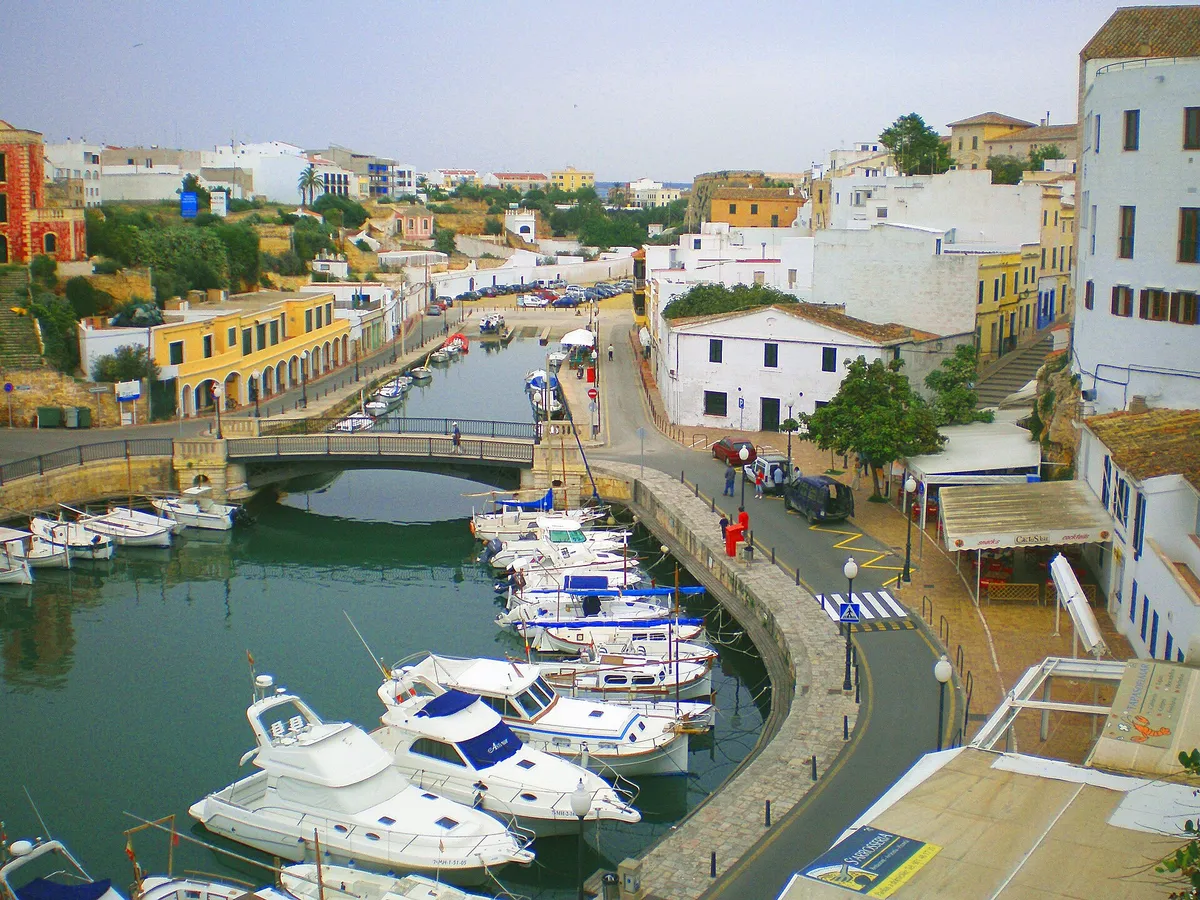
Opposite, in Es Castell, is Calesfonts: a row of old fishermen’s boat shelters turned into terraces at the water’s edge. It is the obligatory dinner stop when you spend a night in the area.
Ciutadella and Fornells
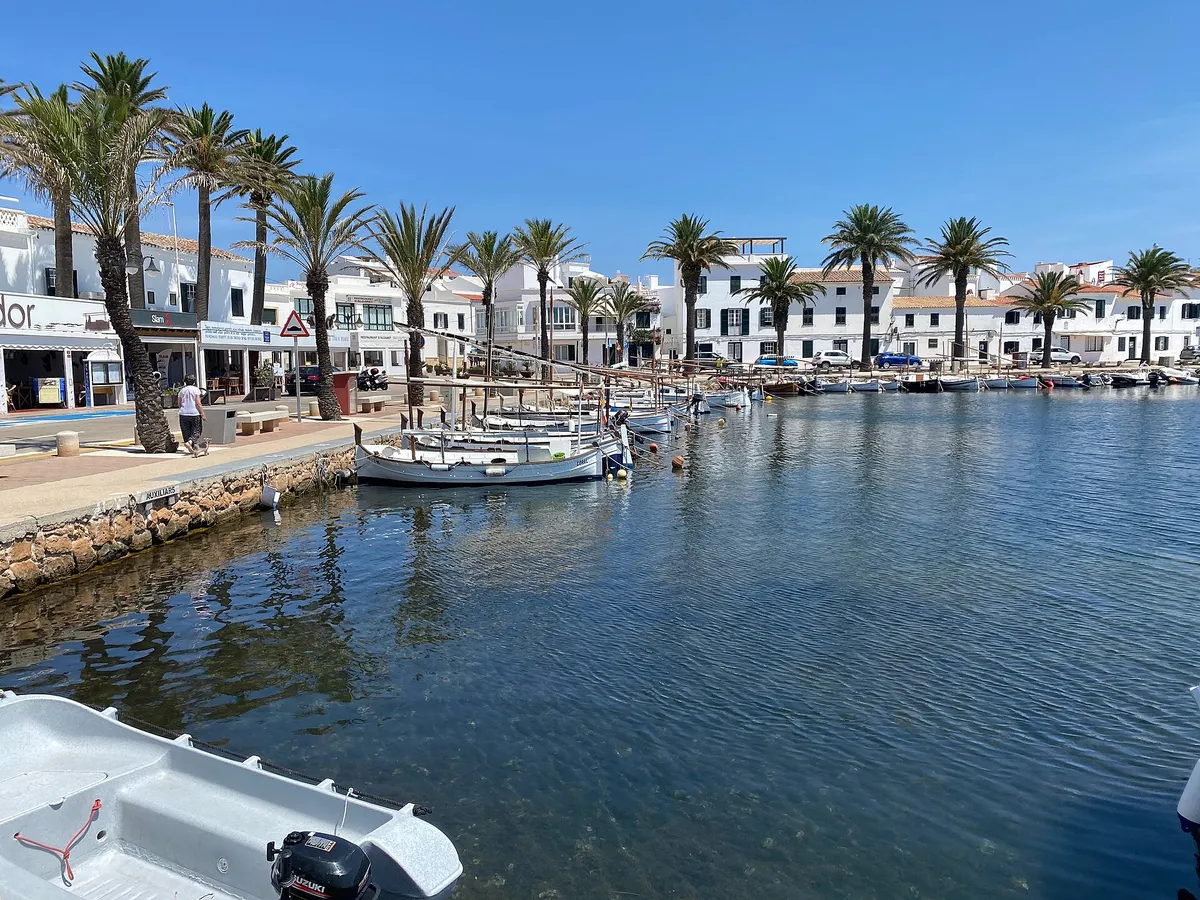
Ciutadella has a narrow, long harbour cut into the old town, with grand houses leaning over the water. Coming in late in the day, with the stone turning gold, is one of those things that justifies the trip on its own. Watch out for the rissaga, the sudden oscillation in water level that occasionally empties the harbour: it is local, it is famous, and it is to be respected.
In the north, the bay of Fornells is a huge, shallow refuge, perfect for spending the day and for learning to sail in calm water. It is also the home of caldereta de langosta, the lobster stew the island has turned into an institution.
Recommended beaches and coves
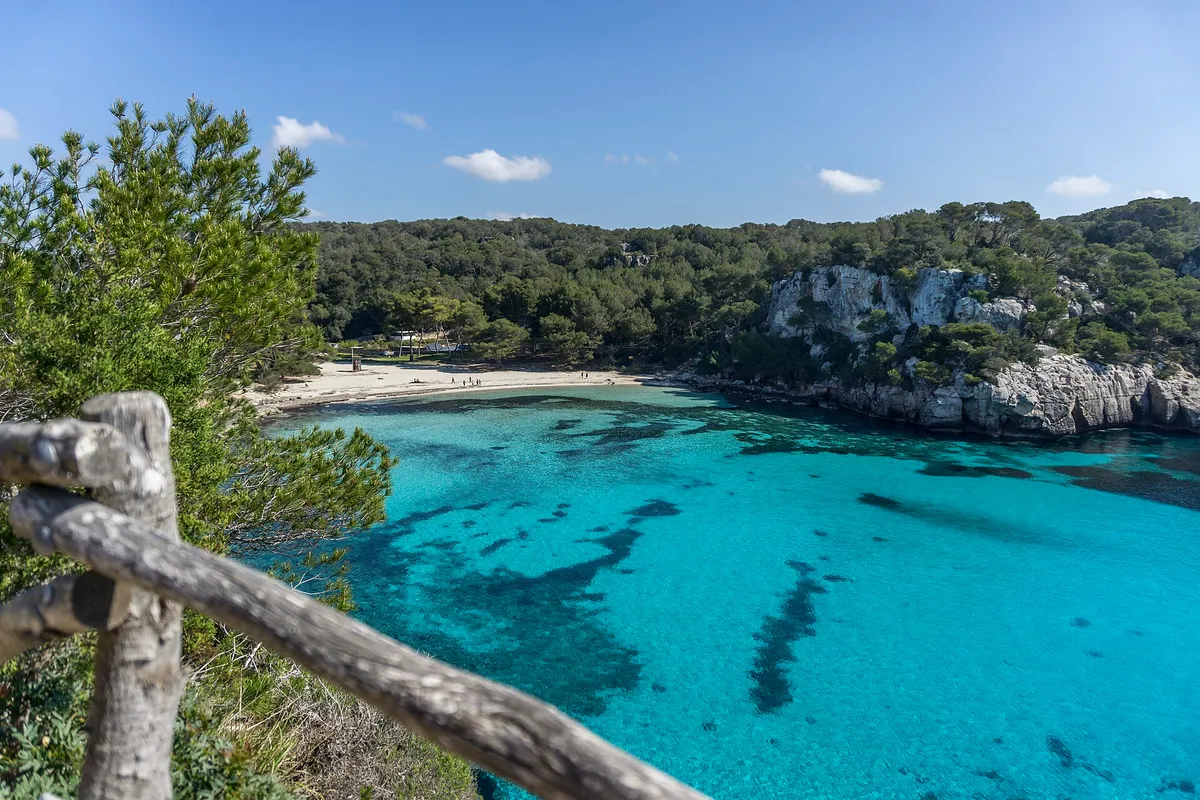
Cala Macarella and Macarelleta
The twin coves of the south coast, with white sand, pine to the shoreline and a deep turquoise. Sandy bottom and good holding.
This is the cove of Edgar’s childhood and he still shows it off as if it were the first time. Getting there early, before people come down the path, and having Macarelleta almost to yourself is a luxury you do not forget.
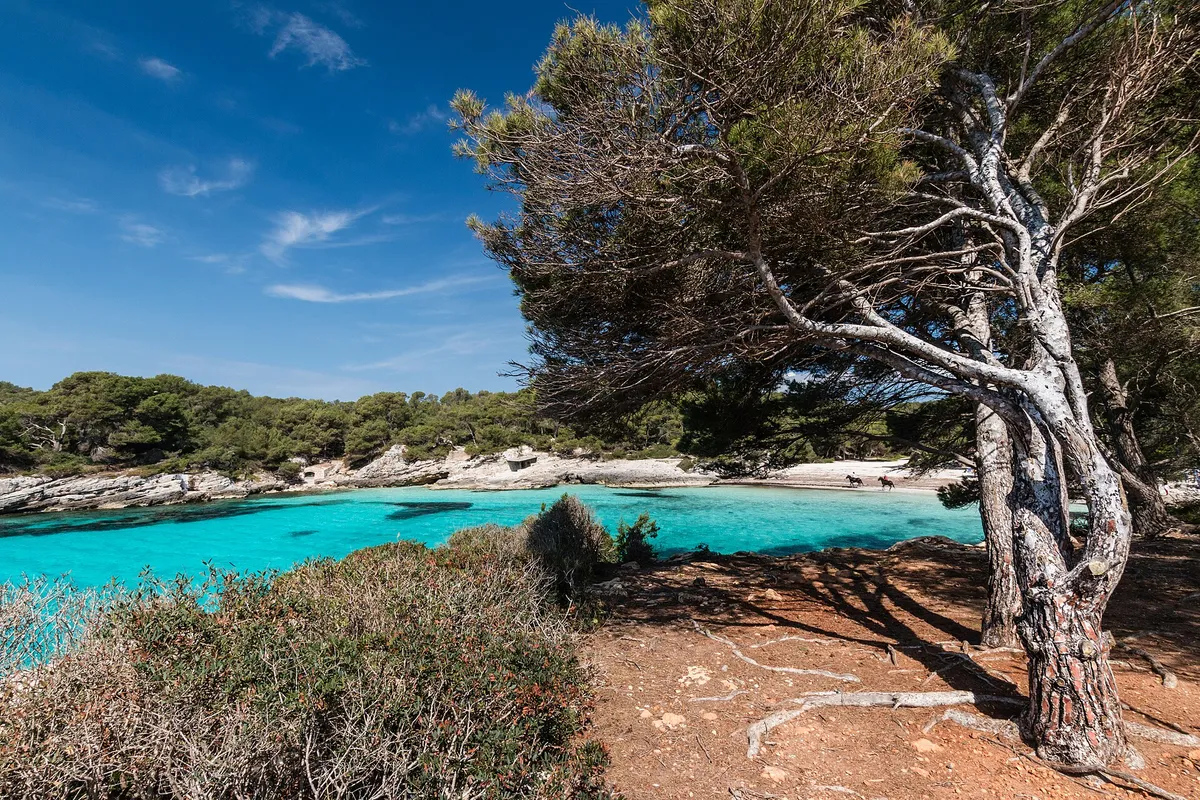
Cala en Turqueta
Sheltered between two arms of rock, very transparent water and a shallow sandy bottom. Easy to anchor except in southerly wind.
The name is not marketing: the water really is that colour. More than once someone has leaned over the rail and asked whether the bottom is a metre down. It is six.
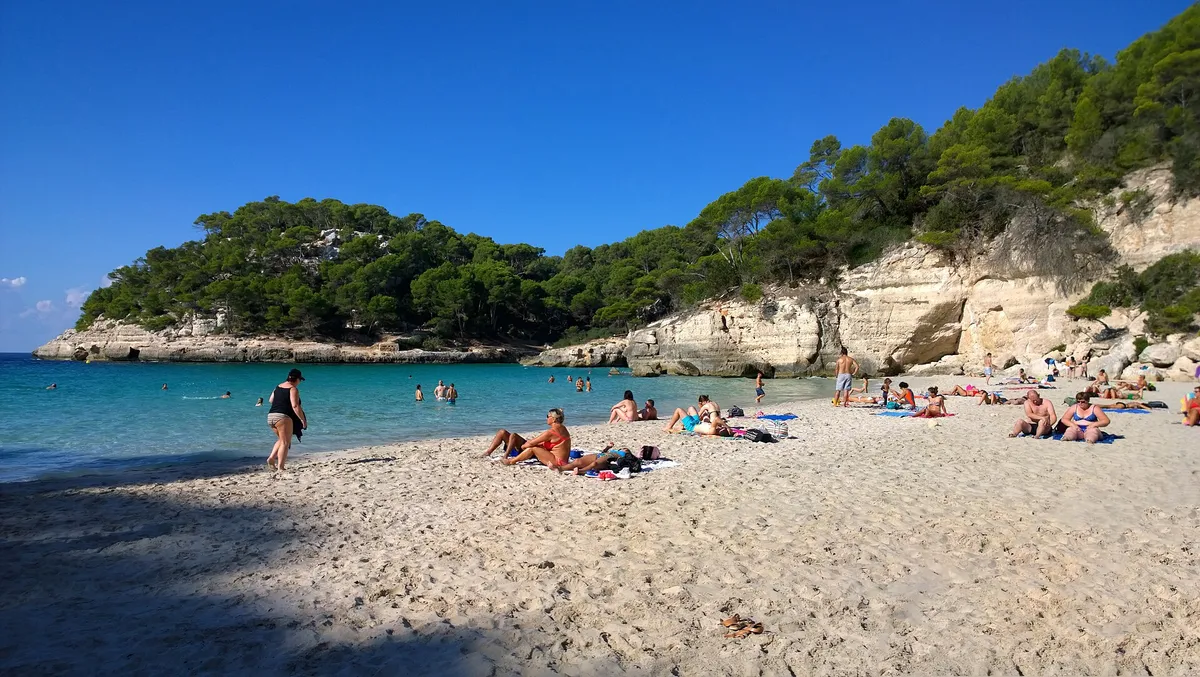
Cala Mitjana and Mitjaneta
Fine sand between low limestone cliffs, with a smaller cove alongside. Very well sheltered from the north.
The one we pick when we want quiet without giving up beautiful water. The cliffs on either side invite jumping, and somebody on board always ends up doing it.
Cala Trebalúger
One of the wildest coves in the south, no road access and a stream running out onto the beach. On foot or by sea only.
This is where what we say about Menorca makes sense. No beach bar, no rented parasols, nothing. Just sand, water and the sound of the stream. It is our favourite in the south.
Cala Pregonda
On the north coast, with golden sand, reddish rock and islets offshore. A completely different landscape to the south.
It looks like another island, or another planet. In low sun the rocks turn a red that does not belong in the Mediterranean. It photographs badly and looks wonderful in person.
Cavalleria and Cala Pilar
Open northern beaches with dark sand and cooler water. Very exposed to the tramuntana.
On calm days they become a small prize, because there is almost never anyone there. Swimming with Cap de Cavalleria behind you feels a little like the end of the world.
Es Grau and Illa d'en Colom
A shallow bay inside the s’Albufera des Grau natural park, with an islet offshore you can go round.
The calmest stop on the island and the best for splashing about with children. The water barely covers you and the island opposite is the perfect excuse to get the kayak down.
Cales Coves
Twin coves with rock pierced by hundreds of prehistoric burial caves. A small, deep anchorage.
Anchoring there is a slightly solemn thing. You are afloat, facing a cliff drilled through by people who buried their dead three thousand years ago. It commands respect, and it should.
Cala Corb and Calesfonts (Es Castell)
At the far end of Maó harbour, with the old boat shelters turned into terraces over the water.
It is not a swimming cove, it is a dinner cove. It comes up at dawn in an odd pink and goes dark with the tables right at the waterline. We include it because it is one of the images of the island we love most.
Recommended restaurants
Opening times, prices and services change every season. If you want to eat at one of them, tell your skipper and we will book ahead.
Es Pla (Fornells)
The home of caldereta de langosta, right on the bay. An absolute classic of the north; book ahead.
Es Cranc (Fornells)
The other great caldereta name in Fornells, with market produce and old-school hospitality.
Sa Llagosta (Fornells)
More chef-driven cooking built on Menorcan produce, in the same village. A short, carefully worked menu.
Café del Nord (Cala Tirant)
A terrace above the beach looking out over the bay. Rice dishes, fish and a sunset that is hard to beat.
Cafè Balear (Ciutadella)
In Ciutadella harbour, with its own fishing boat. Fresh fish and seafood, made for a long lunch.
S'Amarador (Ciutadella)
Also on the harbour, specialising in market fish and caldereta. Very well known on the island.
Trébol (Calesfonts, Es Castell)
In the old boat shelters, tables a metre from the water. Simple seafood cooking, done well.
Cap Roig (Sa Mesquida)
Perched on the rocks north of Maó with open sea views. Fish and seafood, and a lovely place at sunset.
Frequently asked questions
How many days do you need to sail round Menorca?
The island can be circled calmly in three or four days. With a week you have time to go back to the coves you liked best, wait for the wind to swing and do both coasts without hurrying.
When is the best time to sail Menorca?
May to October. June and September are the best months: good water, empty coves and less tramuntana than in spring.
Can you sail from Mallorca to Menorca?
Yes. The channel from Cala Ratjada to Ciutadella is about twenty-five miles, a short passage of half a day if you pick the right conditions.
Which coves in Menorca can only be reached by sea?
Several of the best in the south, such as Trebalúger and Escorxada, have no road access: you walk in along the Camí de Cavalls or arrive by boat. That is where arriving under sail makes the biggest difference.
Shall we plan your day?
Tell us what you feel like and we build the route around it, with skipper and crew included.
Image credits
The photographs on this page come from Wikimedia Commons and are used under their respective free licences.
- Marcelsala007 · CC BY-SA 3.0
- Markus Trienke · CC BY-SA 2.0
- Ben Salter · CC BY 2.0
- LANOEL · CC BY-SA 3.0
- Josep Renalias (Lohen11) · CC BY-SA 4.0