Sailing
How to anchor in the Balearics without damaging posidonia
If you sail in the Balearics, sooner or later someone will tell you not to anchor on the posidonia. It is worth understanding why, because it is not a fad or an environmental fussiness: it is literally the reason the water around these islands looks the way it does.
Published on
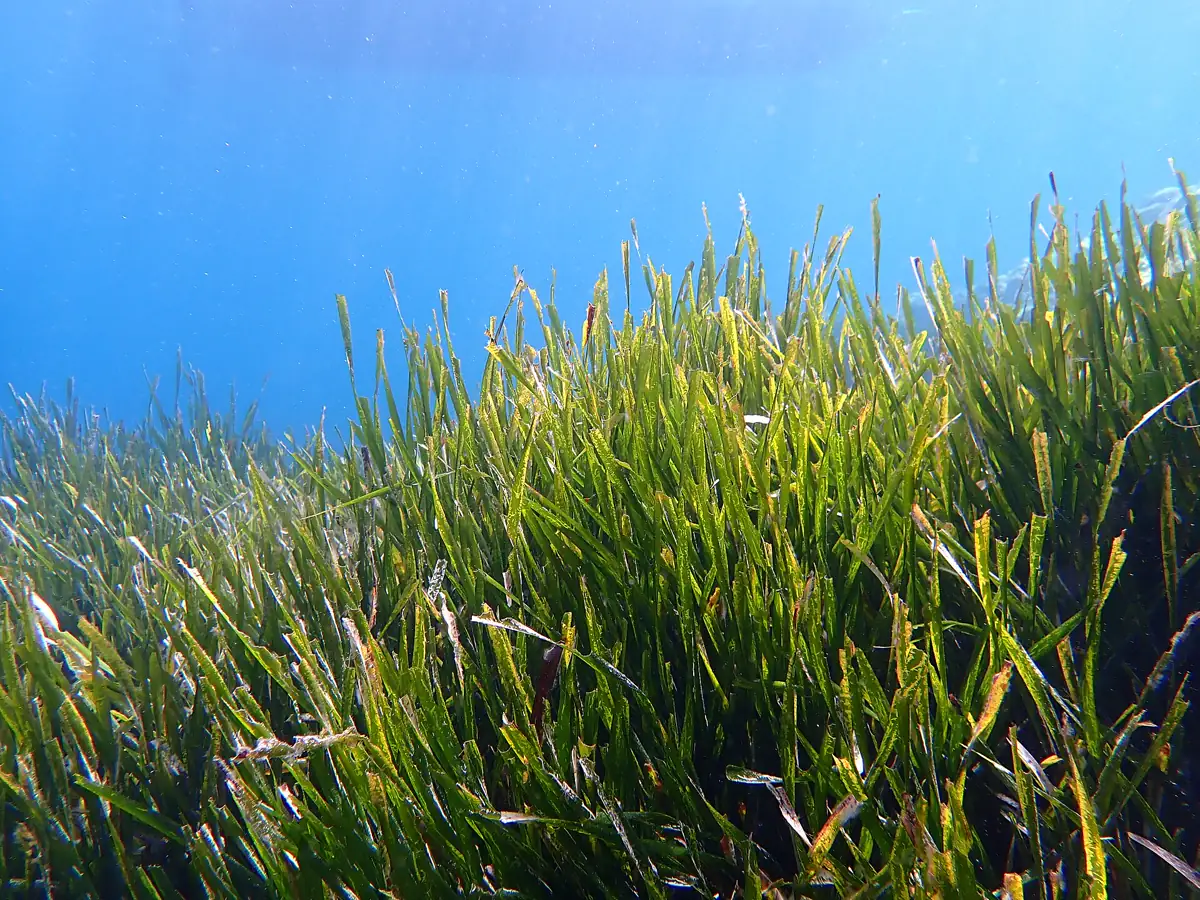
Photo by Frédéric Ducarme · CC BY-SA 4.0
What posidonia is
Posidonia oceanica is a marine plant endemic to the Mediterranean, with roots, leaves and flowers. It is not an alga. It forms underwater meadows that grow very slowly — on the order of a centimetre a year — and can be thousands of years old.
Those meadows do three things: they oxygenate the water, they bind the sediment on the bottom (which is why the water does not cloud up) and they shelter an enormous share of marine life. The meadow in the channel between Ibiza and Formentera is recognised as a UNESCO World Heritage site.
Why an anchor does so much damage
When the anchor drops onto a meadow and is then recovered, it tears out rhizomes and opens a bare patch. At a centimetre of growth a year, that patch takes decades to close, if it closes at all. Multiplied by the number of boats anchoring every summer, the cumulative effect is considerable.
The chain does even more damage than the anchor, because it sweeps a wide radius of seabed as the boat drags or swings with the wind.
What the rules say
In the Balearics, anchoring on posidonia is prohibited as a general rule. There are areas with authorised buoy fields where you moor to a low-impact buoy instead of dropping the anchor, and in those cases staying over a meadow is allowed.
Penalties for uncontrolled anchoring on posidonia can exceed 600 euros. There is also active patrolling in high season in the areas under most pressure, and buoy fields are being extended at points such as Porroig and Cala d’Hort.
How to anchor well, in practice
The visual rule is simple: a sandy bottom looks pale, almost white; posidonia looks like a dark patch, brown or very dark green. You anchor on the pale bit.
In midday light and clear water you can tell perfectly from the deck. If in doubt, take a look with a mask before dropping, or use the seabed chart if your plotter includes one.
- Find the clearing
- Locate a sandy patch wide enough for the boat’s full swinging circle, not just for the spot directly under the anchor.
- Account for the chain
- Pay out the chain you need for safety, but remember the sweep radius grows with it: allow for that circle when choosing the spot.
- Use a buoy if there is one
- In regulated buoy fields, moor to the buoy. It is safer for the boat and it never touches the bottom.
- Weigh anchor vertically
- Motor up over the anchor before lifting it, rather than breaking it out diagonally and dragging along the bottom.
Frequently asked questions
Can you anchor on posidonia in the Balearics?
Not as a general rule. Staying over a meadow is only allowed using authorised low-impact systems, such as regulated buoy fields.
What is the fine for anchoring on posidonia?
Penalties can exceed 600 euros, and there is active patrolling in high season in the areas under most nautical pressure.
How do I spot posidonia from the boat?
Sand looks pale and posidonia looks like a dark patch, brown or very dark green. In good light it is perfectly visible from the deck.