Safety
Schedule pressure sinks boats: why a departure date is never forced
Almost every casualty report from a passage boils down to the same sentence: they sailed when they should not have. Not through ignorance or lack of equipment, but because there was a committed date and nobody wanted to be the one who moved it.
Published on
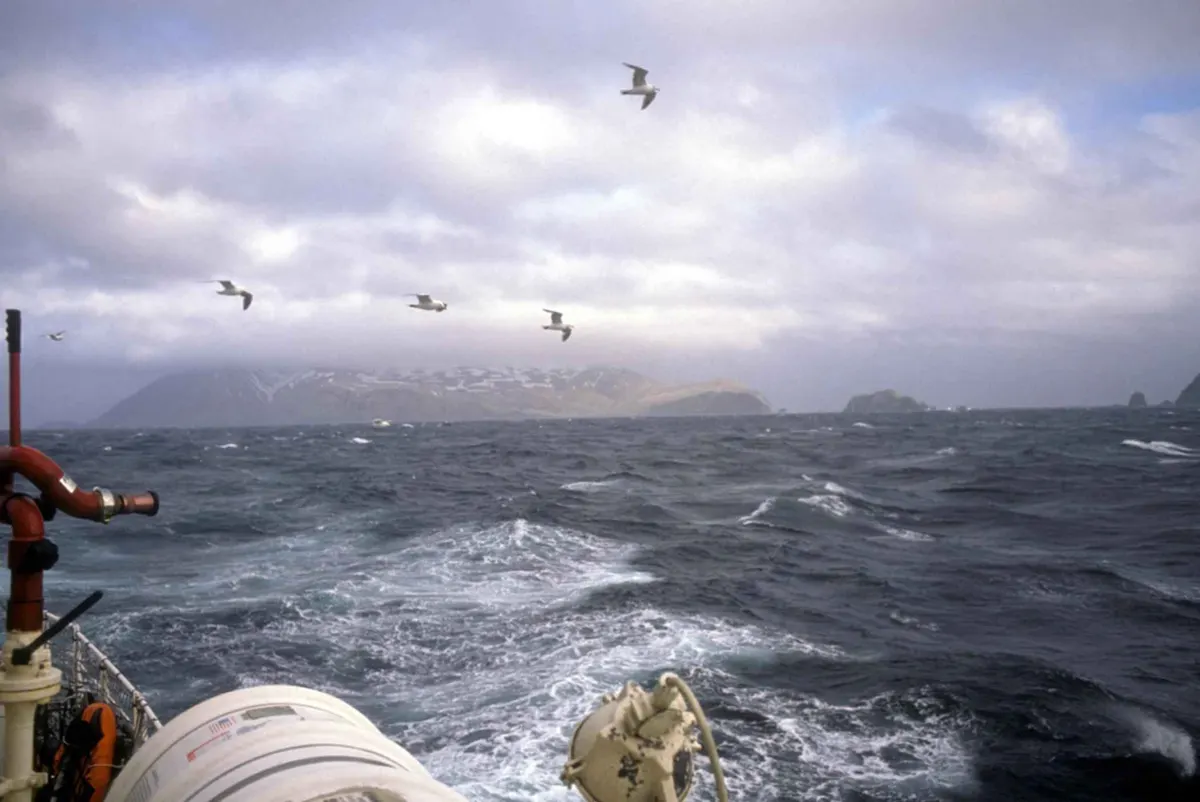
Photo by Angell Bob, U.S. Fish and Wildlife Service · Public domain
How haste gets aboard
Nobody consciously decides to risk a boat. The pressure comes in through the back door, and almost always the same one: there is a buyer waiting at the far end, a charter season starting, a haul-out booked, a flight bought, a crew who only have that week free, an owner who has already told his family he lands on Saturday.
Each of those is reasonable on its own. Together they build a situation where sailing is the comfortable option and waiting requires somebody to take the hit. When the person who has to take that hit is also the person being paid to make the passage, the conflict of interest is obvious.
So the first thing to settle is not the weather: it is who decides, and what happens to that person if they decide to wait.
What breaks when it is forced
The obvious failure is sailing on a bad forecast and taking a beating. But haste does damage long before that.
It shortens the preparation: the pre-departure inspection gets done in two hours instead of a day, known problems are left for later, the part that needed replacing does not arrive in time and the boat sails on "that will hold". It cuts rest: the crew arrive off a flight and sail the same day, starting the passage with the sleep tank already empty. And it contaminates decisions mid-passage: when a problem appears, a crew in a hurry tends to press on rather than divert, because diverting means losing a date that was already tight.
That last point is the dangerous one. A small problem handled calmly is a technical stop. The same problem with a date on top becomes a major breakdown two hundred miles offshore.
Setting a date without committing to it
Planning is not the opposite of waiting. A delivery is organised around a concrete target date, because without one you cannot book flights or berths or coordinate anybody. What changes is the status of that date.
The healthy way to frame it has three layers. A departure window, usually several days rather than one. A passage plan with ports of refuge identified along the whole route, so that diverting is a planned option rather than a defeat. And explicit margin at the destination, so the arrival date given to the owner already contains the possibility of waiting.
When those three are on the table before signing, waiting stops being bad news and becomes what was planned.
Who decides, and when
The decision to cast off belongs to the captain, on the day, with the forecast in front of him and without consulting the calendar. That is not professional courtesy: it is the only way the decision is made by the person with all of the information and none of the other pressure.
And it is made more than once. On a long passage, every stop and every new forecast is a fresh decision to go or stay. A captain who sailed on Monday may decide on Wednesday to sit for two days in an intermediate port, and that is not a planning failure: it is exactly the plan working.
What is our obligation is to say so at the time. If the window moves, the owner hears about it that day and with the technical reason, not in an apology after the fact.
What we ask of the owner
Three things, all of them up front. Margin: a few days of cushion between the expected arrival and whatever is actually committed at the far end. That tickets and appointments are set against the padded date, not the optimistic one. And freedom to spend in port: if three days of waiting for a window are needed, those berths and expenses are part of the cost of the delivery, not an extra to be justified each time.
An owner who grants those three is buying something concrete: that the person deciding whether to sail has no reason at all to say yes when the technical answer is no.
Frequently asked questions
What happens if weather delays my delivery?
We wait, and you hear about it the same day, with the forecast and the reason. The delay is absorbed by the planned margin, and port costs during the wait are in the quote from the start.
Who finally decides whether to sail?
The captain, on the day, with the forecast in front of him. Neither the owner nor the office can overturn that decision, and it is explained that way before we begin.
How much margin should I leave on the arrival date?
It depends on the route and the season, but as a guide expect several days of cushion on coastal passages and considerably more on ocean legs or out of season. We give you a concrete figure with the quote.
Do you sail at night on a delivery?
Yes, whenever the route and conditions call for it, which is why the team is sized to cover watches with real reliefs. Sailing at night with enough crew is routine; doing it with exhausted people is something else.