Maintenance
Boat maintenance: what to check, how often, and why the history is worth money
A boat is a set of systems that work and age at different rates. Engines, batteries, wiring, electronics, pumps, seacocks, hull, propellers, air conditioning, one small sealant joint: they look independent and they all govern the same three things — reliability, safety and what the boat costs to own. Which is why maintenance should not come down to servicing the engine once a year.
Published on
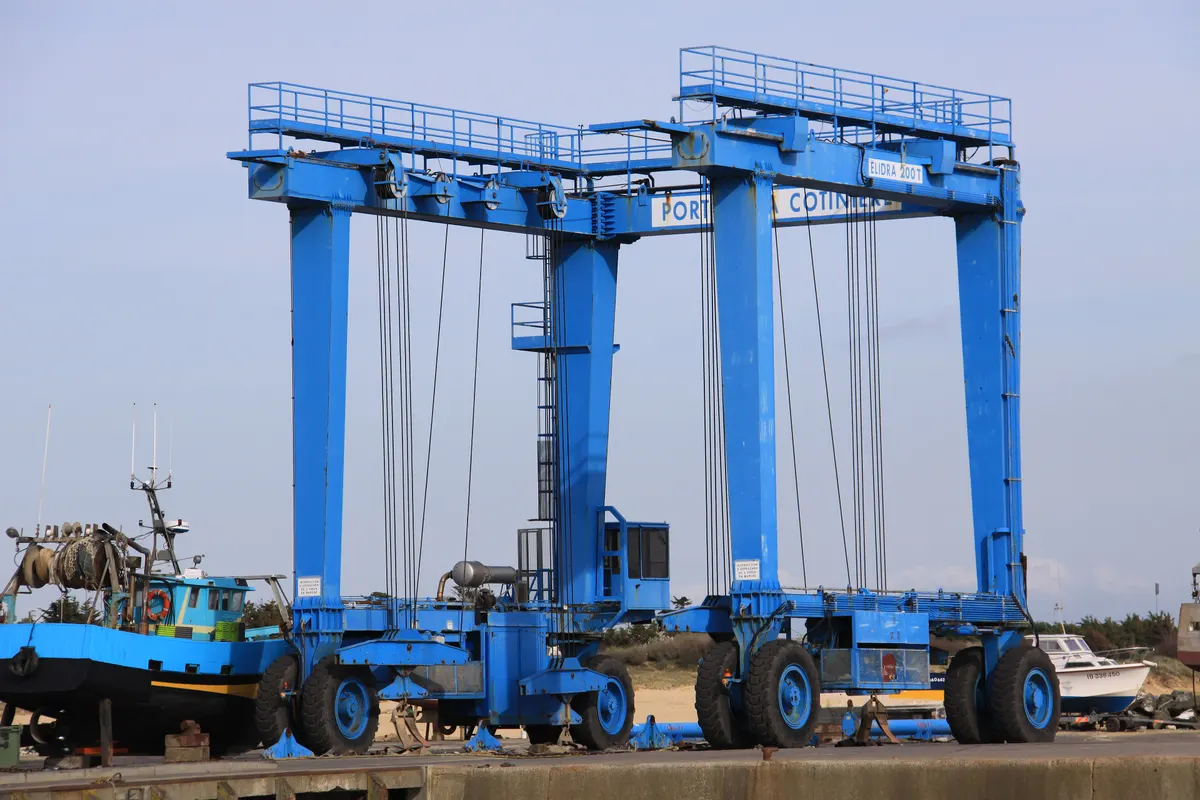
Photo by Jean-Pierre Bazard Jpbazard · CC BY-SA 3.0
The eight areas of a boat
The scope depends on length, engines, age, use and equipment — a six-metre runabout and a fifteen-metre yacht do not carry the same technical load — but the map is always the same.
Mechanics and engines: oil, filters, cooling, the raw-water circuit, fuel, belts, impellers, heat exchangers, turbo, exhaust, mounts and scheduled service. Drive: shafts, sterndrives, pods, transmissions, propellers, seals, alignment and vibration. Electrics: batteries, chargers, alternators, inverters, panels, wiring, protection and parasitic loads. Electronics: plotter, radar, sounder, AIS, VHF, autopilot, sensors and data networks.
Hull and underwater gear: antifouling, anodes, seacocks, skin fittings, gelcoat, laminate, rudders and corrosion. Deck and exterior: teak, stainless, sealants, hatches, windlass, ground tackle, fittings and canvas. Water and sanitation: pumps, tanks, plumbing, calorifier, heads, bilges, grey and black water and watermaker. And comfort systems: air conditioning, heating, refrigeration, galley, generator, hydraulics and stabilisation.
Preventive does not mean replacing things just in case
Preventive maintenance means inspecting, measuring, testing, cleaning, lubricating, adjusting and replacing when there is a technical reason or a manufacturer’s interval behind it. Replacing on intuition is expensive and does not fix anything.
The examples are always the same because they always happen. A battery can still turn the engine over having lost half its capacity: only measuring shows it. A hose clip can look perfect outside and be degraded inside. An impeller works until a vane lets go and ends up in the heat exchanger. A seacock shows corrosion long before it leaks.
The advantage of a preventive plan is not only avoiding breakdowns: it is being able to group work into one visit or one haul-out, cut down on emergencies — which always cost more — and separate with some judgement what has to be done now, what can be scheduled and what is an optional improvement.
A calendar so it does not all land in the same month
The exact intervals come from each manufacturer’s manuals. This outline is for ordering the work, not for replacing them.
Before the season, commissioning: engines, batteries, safety gear, air conditioning, bilge pumps, electronics, fuel and everything that has to work from day one. During the season, observation and small checks: levels, leaks, temperatures, charging, filters, cleaning, lines, ground tackle and any change from normal behaviour.
At the end of the season, review and conservation: find what has accumulated, clean, protect and schedule work before a long lay-up, which is when most of the silent damage happens. And at the planned haul-out, everything that can only be seen out of the water: underwater gear, skin fittings, anodes, propellers, shafts, sterndrives, rudders, antifouling and a full visual inspection.
Haul-out frequency is not the same for every boat: it depends on use, area, the type of antifouling, time spent idle, hull material and the manufacturer’s recommendation.
Warning signs not worth normalising
A boat can keep working while a problem develops. Noticing changes from her usual behaviour is itself a maintenance tool.
A different temperature on an engine or a piece of equipment calls for checking cooling, ventilation and load. A new vibration points at the propeller, shaft, alignment, mounts or simply fouling. A slower start can be the battery, the connections, the starter, the alternator or the fuel. A water or bilge pump cutting in more often than usual almost always means a leak.
Damp or a smell means finding the source — sealants, heads, bilges, tank, plumbing or condensation — before repairing any finish. A battery bank falling faster than it should is hiding equipment, a connection or a battery in poor condition. The colour, smell or quantity of exhaust smoke says something about fuel, load, cooling and combustion. And intermittent alarms are the worst candidates for being ignored: they go away, and the most useful clue goes with them.
What does it cost to maintain a boat?
There is no serious figure that comes from length alone. Two boats the same length can have completely different annual costs: one with a simple outboard and few systems, another with twin engines, a generator, air conditioning, full electronics, hydraulics, several battery banks and more demanding underwater gear.
It changes with use too. A boat that sails a lot consumes maintenance by the hour; one that sits on a berth all year consumes it by time and through what idleness spoils, which is not little. And it changes with the starting point: a unit with a regular history is predictable, one carrying deferred work is not.
It is also worth separating technical maintenance from the other costs of ownership that make up the annual budget: the berth — often the biggest line and the one that varies most by port, area and season — insurance, taxes and fees, fuel, winter storage, cleaning, transport and inspections.
The practical conclusion is uncomfortable but useful: the purchase price is only part of what the boat costs. An apparently cheap unit can turn out expensive if it carries deferred maintenance, and a dearer one that has been looked after and documented is usually more predictable.
The history is value too
A well-maintained boat should be explainable with dates, invoices, hours and jobs. That documentation is what separates a boat that presents well from one whose care can be proved, and in a sale that difference is paid for.
Documenting is simple and almost nobody does it: date, engine hours, what was checked, what was replaced, who did it and the invoice. It avoids repeating diagnoses, tells you when the next thing is due and, when the time comes to sell, answers a buyer’s questions with paper rather than memory.
Before buying, a pre-purchase survey finds deferred maintenance and sets the priorities. Before selling, resolving the reasonable items and putting the paperwork in order reduces objections and shortens the negotiation.
And how it relates to a delivery
None of this is separate from passages: it is precisely what decides whether a boat can make one. A boat with maintenance up to date is prepared for a delivery in a few hours. One carrying two years of deferred work needs a long inspection and, often, repairs before she can sail at all.
Put another way: maintenance does not make a delivery more expensive, it makes it cheaper. What makes it expensive is discovering on the dock, with the date on top of you, everything that had been waiting for two years.
Frequently asked questions
How often does a boat need maintenance?
There is no single frequency. Some items depend on hours of use, others age whether or not the boat sails. The practical approach is a seasonal outline — commissioning, monitoring, closing down and haul-out — always respecting the manufacturer’s intervals.
What is the difference between preventive maintenance and repair?
Preventive work inspects, measures and replaces before something fails, with a technical reason behind it. Repair begins once there is a symptom, and it should begin with a diagnosis rather than a parts list: swapping components without identifying the cause hides the problem and inflates the bill.
What does it cost to maintain an eight-metre boat?
Length alone does not give a useful answer. It depends on engines, age, equipment, use, prior condition and location. Two eight-metre boats can cost very different amounts per year, and the berth often weighs as much as the technical maintenance.
Is it worth keeping every invoice?
Yes, and it is one of the most profitable things you can do. The history avoids repeating diagnoses, orders what comes next and, at sale, turns "she has been well looked after" into something you can prove.