Basics
What we need to know to quote a delivery
The most common question is what it costs to deliver a boat, and the honest answer is that it depends. That is not evasion: the same passage can cost twice as much depending on which boat makes it and when. With these four blocks of information a fixed price can replace a useless range.
Published on
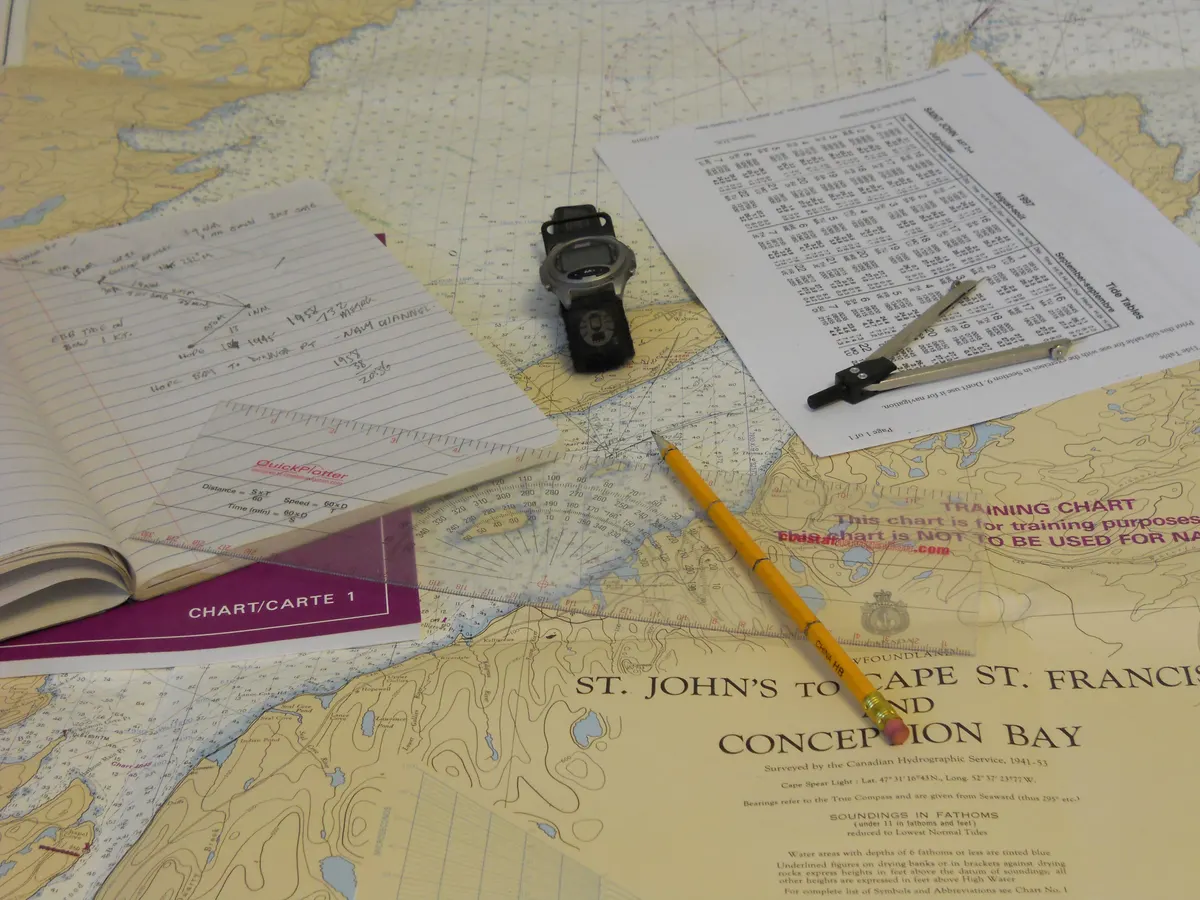
Photo by J. S. Bond · CC BY-SA 3.0
01 · The boat and her engines
Model and length to begin with, but what really moves the quote comes after: engines and how many, real range with full tanks, sustainable cruising speed — not the brochure maximum — and approximate consumption at that speed.
From that we work out how many days at sea the route holds, how many fuelling stops it needs and how much crew it demands. A twelve-metre sailing yacht and a twelve-metre motor yacht are two entirely different quotes for the same passage.
And the state of maintenance, as honestly as possible: date of the last service, engine hours, whether she has been laid up, whether there are known or pending faults. A well-maintained boat is quoted directly; one that has sat for two years needs a longer pre-departure inspection, and that is better said at the start than discovered in the week of departure.
02 · Origin and destination
Actual ports, not cities. The difference between two marinas in the same bay can be a day of work and several hundred euros in manoeuvres and fees.
From the ports we plot the route, work out the real distance — which is almost never the straight line — and identify the possible stops and ports of refuge. Restrictions also appear here: depth at the entrance, bridge clearance on canals, access hours, locks, restricted zones or passages that are only made in certain conditions.
If the boat is ashore, in a yard or on a berth that has to be released, say so here: the launch, the move to the departure port and the dealings with the yard are part of the job.
03 · Paperwork and insurance
The boat’s flag and the papers available aboard. Flag governs entry and exit formalities in certain countries and, on some routes, the viability of the passage itself.
And the piece that most often stops a delivery: confirmation that the insurance covers this kind of passage, with an external crew, in that area and on those dates. It does not have to be resolved before asking for a quote — in fact we help frame the question to the broker — but it helps to know where it stands, because if the policy does not cover the route, the delivery does not happen as planned.
04 · The calendar
A target date, and above all margin. How long we can wait if the weather window does not cooperate, and what real commitment the arrival date is set against: a sale, a charter season, a booked haul-out, family use.
Margin is a pricing input, not a courtesy. A route with two weeks of flexibility is planned differently — and comes out cheaper and safer — than the same route against an immovable date, which means holding crew on standby and budgeting for worse scenarios.
The season counts too. The same passage in June and in November is not the same passage, in days, in crew or in price.
What you get back
With those four blocks we return three things. A fixed, itemised quote, separating crew fees from the boat’s own costs: fuel, moorings, port fees and the crew’s travel out and back. A passage plan with the route, the intended stops, the ports of refuge and an estimate in days. And the proposed crew, with the reason those people are aboard and not fewer.
If something cannot be closed yet, we say which point it is and why, rather than burying it inside with a margin to cover ourselves. A quote with one open, explained item is more useful than a closed one rounded upwards.
What cannot be quoted blind
Two things no serious company should close without seeing the boat: the scope of the pre-departure inspection when she has been laid up a long time, and the cost of whatever repairs that inspection turns up.
The first is narrowed down with a visit, or with photographs and the maintenance history. The second is quoted separately once it is known what is there. Anyone who closes both over the phone without seeing the boat is guessing, and that guess gets paid for one way or another.
Frequently asked questions
What does a boat delivery cost?
It depends on the distance and stops, the boat and her cruising speed, the crew the route demands and the time of year. Fuel, moorings, fees and the crew’s travel are separate. Give us the boat, the route and the dates and we return a fixed, itemised price.
Do you charge per mile or per day?
Neither formula works on its own. A mile on a coastal route with a stop every day does not cost the same as a mile offshore with watches around the clock. We quote the complete delivery, itemised between fees and the boat’s own costs.
Do I need the insurance sorted before asking for a quote?
No, but it helps to know where it stands. We help frame the question to your broker, because the insurer’s answer can dictate the route, the dates or the number of crew.
Can you deliver a boat that has not sailed in years?
Yes, and it is a common case. What changes is that the pre-departure inspection is longer and that repairs before departure have to be expected. Those are quoted separately once it is known what she needs, not guessed at inside the delivery price.