Logistics
How a boat travels aboard a ship: lift-on, float-on and what will be asked of you
Moving a boat as cargo sounds simple until you have to do it. There are several loading systems, not all of them suit every vessel, and the shipping line decides which one it will accept and how the unit must be presented. Here is what is worth knowing before asking for a freight quote.
Published on
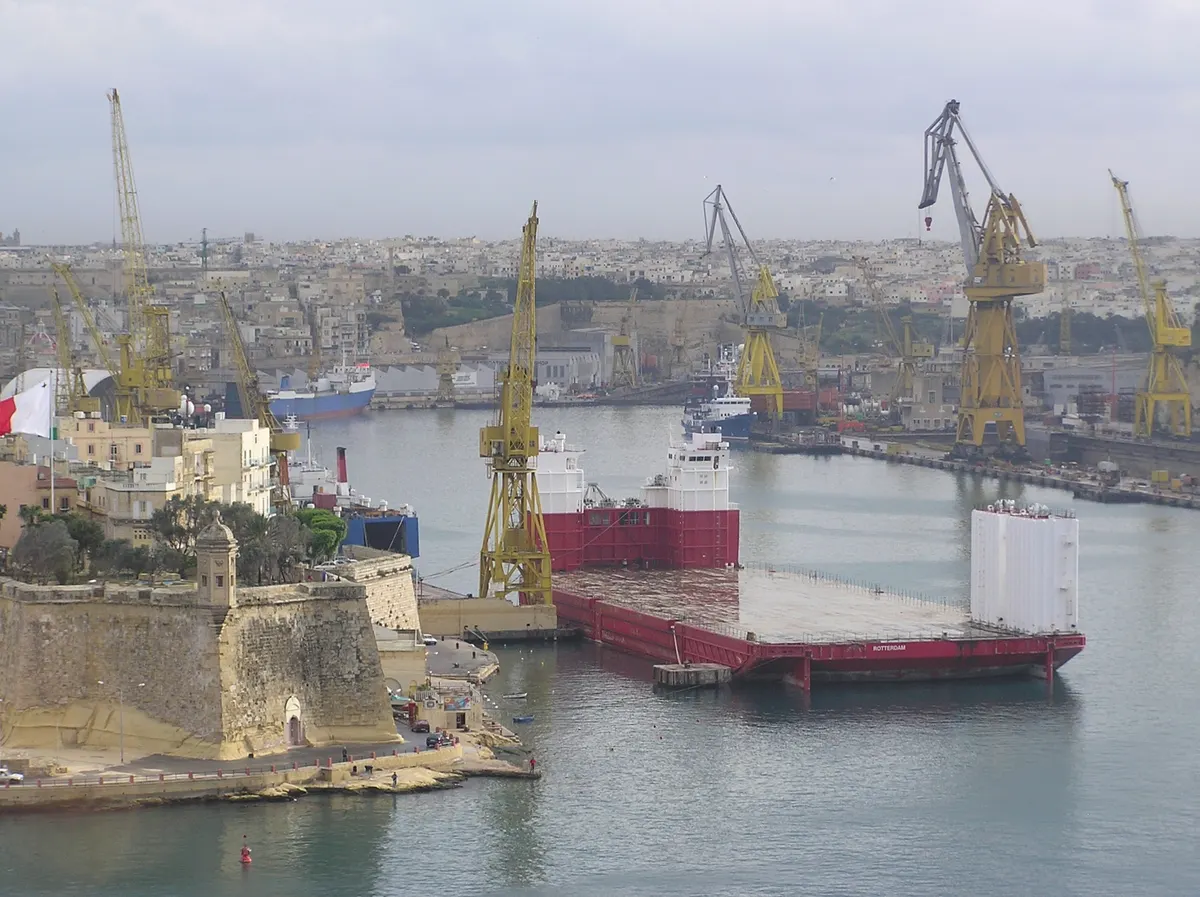
Photo by Trip2zh · CC BY-SA 3.0
Lift-on / lift-off: craned aboard
This is the most common system. The boat is lifted by the ship’s own cranes or by coordinated shoreside equipment, and set down on a cradle or supports built to carry her weight for the whole voyage.
The critical part is load distribution. A hull resting on the wrong points through weeks at sea can distort, which is why the cradle matters as much as the freight: either the owner supplies one built for the boat, or it has to be confirmed that the ship’s supports suit that particular hull.
The lift itself also has to be worked out: slings at the correct points, protection where the sling meets the hull, and prior removal of anything that fouls the lifting gear.
Float-on / float-off: floated aboard
On semi-submersible ships the procedure is different and rather spectacular. The ship ballasts down until her cargo deck is submerged, the yacht floats in and is positioned over her supports with the help of divers and mooring gear. The ship then deballasts, the deck rises, and the boat is left seated and lashed for the voyage.
It is the usual method for large or heavy units, and for those that cannot be slung. It avoids the crane operation but demands very precise positioning over the supports and diving work during loading.
Other configurations
Depending on size, route and operator there may be intermediate solutions: general cargo ships with a ramp, deck carriage aboard container vessels for small units, or boats travelling in a cradle inside an oversized container.
The rule is always the same: the carrier determines the method and the requirements. What is negotiated is the date and the price, not the procedure.
What decides whether your boat fits
Five things override everything else. Dimensions and weight: length, beam, draft, total height from keel to the highest thing that cannot be removed, and real displacement rather than the brochure figure. The route: the big operators run specific lines between specific ports, and if your origin or destination is not on one, add a delivery under your own power to reach the loading port.
The dates: routes are seasonal and follow the yachting calendar, with specific sailings that fill up. The space available: even if the route exists and the date suits you, the slot may already be sold. And the port itself: not all of them have the crane, the depth or the operation required.
That is why ship transport is planned with months of margin, not days. Anyone asking in June about a July sailing usually finds there is no room left.
How the boat is prepared
A boat travelling as cargo takes constant vibration, salt and the apparent wind of a voyage for days or weeks, with nobody aboard to correct anything. Whatever can move, will.
Typical preparation means removing and stowing below anything that can come adrift — aerials, biminis, awnings, cushions, passerelles, spare propellers — taking off or securing exterior electronics, closing and sealing openings, draining circuits if there is a freezing risk on the route, disconnecting and protecting batteries as the carrier requires, emptying tanks to the minimum permitted, and protecting the topsides at the support and sling points.
And one thing that is always forgotten: document the boat’s condition before handing her over. A full photographic record, including existing damage. Without that starting point, any later argument about a scrape is impossible to win.
Paperwork and insurance
A boat travelling as cargo clears customs as cargo. Depending on origin, destination and flag there may be export or import documentation, proof of the vessel’s fiscal status and coordination with an agent at each port.
And cover is not inherited. The boat’s navigation policy does not automatically cover her carriage as goods: cover for that phase has to be arranged or extended, and it is worth knowing exactly what the carrier accepts and what it does not, because carriers’ conditions usually limit their liability considerably.
Frequently asked questions
What is lift-on / lift-off and how does it differ from float-on / float-off?
With lift-on/lift-off the boat is craned aboard and set on a cradle on the ship’s deck. With float-on/float-off the ship ballasts down, the boat floats into position, and the ship then deballasts and leaves her seated. The first is the more common; the second is used mainly for large or heavy units.
Do I need a cradle to ship my boat?
Almost always, unless the carrier confirms its own supports suit that hull. The cradle has to spread the weight across the correct structural points: badly calculated support over weeks at sea can distort a hull.
How far ahead should it be booked?
Months, not weeks. Routes are seasonal, sailings are specific and space runs out. The more unusual the boat in size or weight, the more notice is worth having.
What has to come off the boat before shipping?
Anything that can come adrift or be damaged: aerials, awnings, biminis, cushions, passerelles and removable exterior electronics. Openings are closed and sealed, batteries and tanks handled as the carrier requires, and the support and sling points protected.