Protocols
Knowing how to sail is not enough: delivery crews are picked for how they fix things
Nothing goes wrong with a boat sitting in port. Problems turn up at three in the morning, beam-on to the sea, two hundred miles from the nearest harbour, with half the crew asleep. At that moment it does not matter how many miles are on the captain’s CV: what matters is whether that crew has practised what they now have to do.
Published on
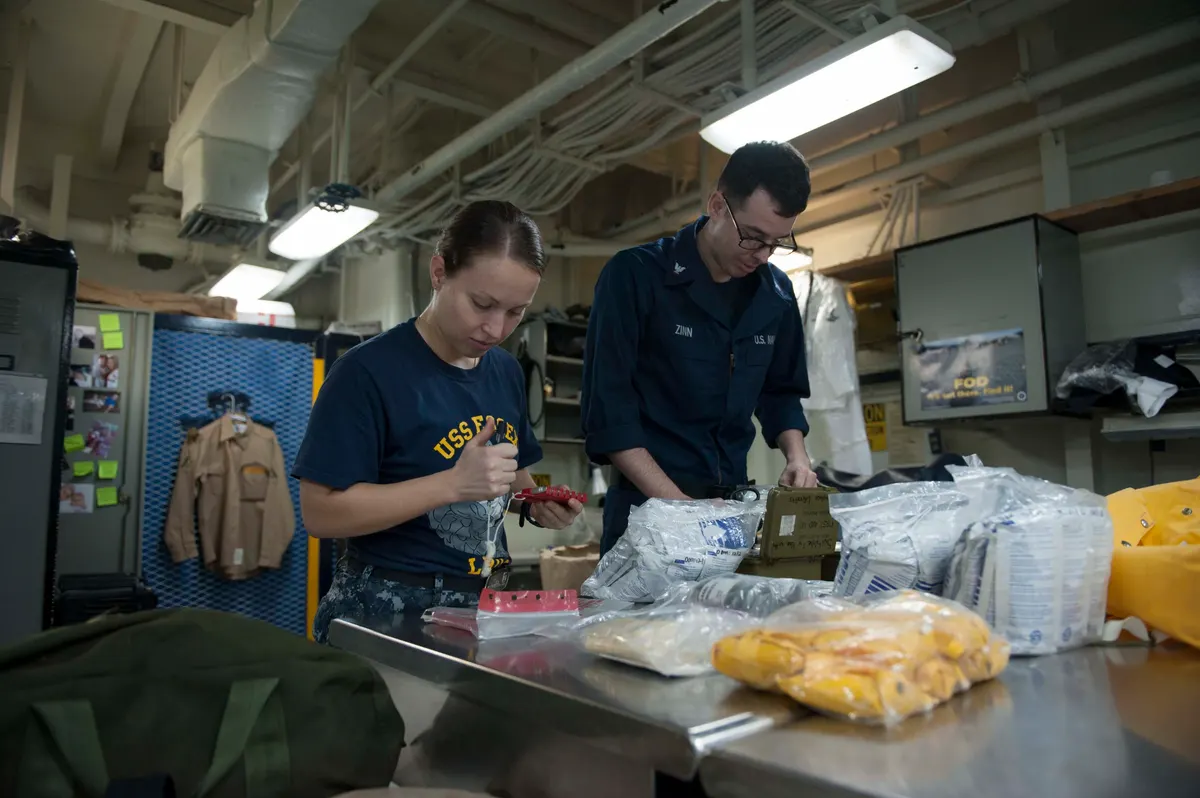
Photo by Seaman Molly Evans · Public domain
The difference between sailing well and fixing things
Sailing well is necessary and not sufficient. A skipper can spend twenty years running day trips in familiar water and never have had to change an impeller in a seaway, bleed a fuel system, rig an emergency tiller or stop water coming in through a failed skin fitting.
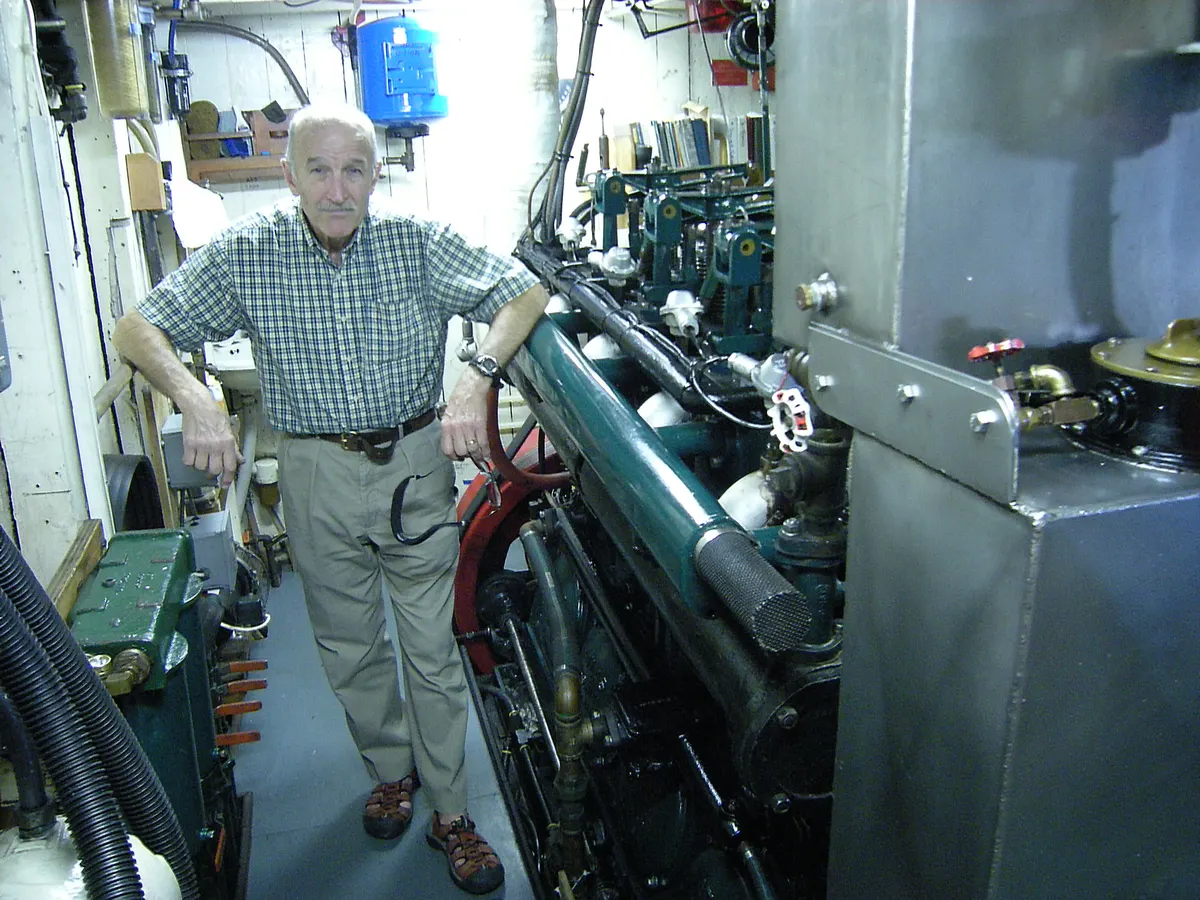
On a delivery, that arrives. Not always, but often enough that whoever organises the passage has to assume it will. The most repeated failures are unheroic: an alternator that stops charging, a fuel filter choked because a dirty tank got stirred up, a bilge pump that jams, an autopilot that gives up, a furler that binds, a belt that snaps. None of them sinks a boat. All of them, badly handled, eventually can.
Which is why a delivery crew is chosen for what they can repair as much as for what they can sail.
What the merchant navy does and leisure boats barely copy
On a merchant or passenger ship, drills are compulsory, scheduled and logged. Abandon ship, fire, man overboard, flooding, steering failure, medical emergency, recovery of a person from the water. They are practised, timed and recorded. Every crew member knows their own station and how long they have to reach it.
In the leisure world this barely exists. People step aboard, cast off and trust that nothing will happen. When it does, five people who have never rehearsed anything together try to improvise in the dark and the noise.
What a professionally trained crew brings is not only the certificate: it is that culture, carried onto a private owner’s boat. On a long delivery it is entirely reasonable to spend the first afternoon walking the procedures through on that specific boat, and to run them again halfway across, when routine has quietly dropped everyone’s guard.
The first-day familiarisation
Before casting off, the crew walks the whole boat and physically locates — by touching it, not pointing at a plan — everything that might be needed in the dark: every seacock and its matching wooden plug, the main battery isolator, the extinguishers and fire blanket, the alternative escape route, the flares and their expiry date, the EPIRB and how it is triggered, the electric bilge pumps and the manual one, the emergency tiller and the tool that fits it, the first aid kit, the rigging cutters if she has a mast, and the windlass key.
It is half an hour of work. It is also the half hour that decides whether somebody finds the right seacock in twenty seconds or in five minutes, with water already above the bilge boards.
Then responsibilities are split: who owns machinery, who owns electronics and communications, who owns the safety gear. Having a clear owner for each area prevents the worst case, which is everybody assuming somebody else was watching it.
Procedures, not heroics
A well-handled emergency is boring. Somebody calls what is happening, somebody takes command, a known sequence runs, and a report goes out. Heroic improvisation is what happens when there was no procedure.
The basics worth writing down and rehearsing on any passage are: man overboard by day and by night, flooding, engine-room and galley fire, total steering failure, total power failure, dismasting on a sailing yacht, medical emergency and a distress call. It does not take a hundred-page manual: it takes one sheet each, read by everyone and practised at least once.
And one detail makes the practical difference: procedures are written in the language the whole crew speaks. An emergency is not the moment to translate.
Spares and the ability to repair
Carrying spares with nobody who can fit them is dead weight. Knowing how to fit them without carrying them is frustration. The technical kit for a passage is decided together with the crew who will be aboard, according to what those people can actually resolve at sea.
Typically: fuel and oil filters, impellers, belts, oil, coolant, hose clips, tapered wooden plugs for the skin fittings, line and tape, fuses, terminals and cable, basic and engine-specific tools, and on sailing yachts shackles, spare line, sail tape and something to repair a sail at sea.
The useful question an owner can put to any company before hiring them is not how many miles their captain has. It is this: if the engine stops halfway across, what exactly does your crew do, and with what?
How we do it
Our crew is never a single person. Two as a minimum, and from there the team is sized to the distance: the officers needed to cover watches so that nobody makes decisions exhausted, a chief engineer when the passage calls for one and a cook on the long ones. There may be deckhands in the team, but navigation watches are stood only by certified professional officers and captains.
Before anyone boards we check that their licences, safety certificates and medical are current. And whatever is checked, practised or decided goes into the logbook, because if it is not written down it was not done.
Frequently asked questions
Which drills are worth running on a leisure boat?
At minimum man overboard by day and by night, flooding, fire, steering failure and a distress call. On long passages it is worth repeating them halfway across, when routine has relaxed everyone.
How many people are aboard on a delivery?
Never one. Two as a minimum, and from there sized to the distance: the officers needed to cover the watches, a chief engineer if the passage requires it, and a cook on long ones.
What qualifications does the crew hold?
Navigation watches are stood only by certified professional officers and captains. Before anyone boards we check that their licences, safety certificates and medical are current.
What happens if something breaks mid-passage?
It is fixed aboard where possible, with the spares and tools embarked for that particular route, and reported to shore. Where it cannot be, we divert to a port of refuge from the passage plan. Either way you hear about it at the time, not on arrival.